Family Vet Limited
A big part of our local community - Our Veterinary Practice has been an integral part of our local community since February 2010. In that time, we’ve helped thousands of our clients cats & dogs, rabbits, rats and even a few birds.
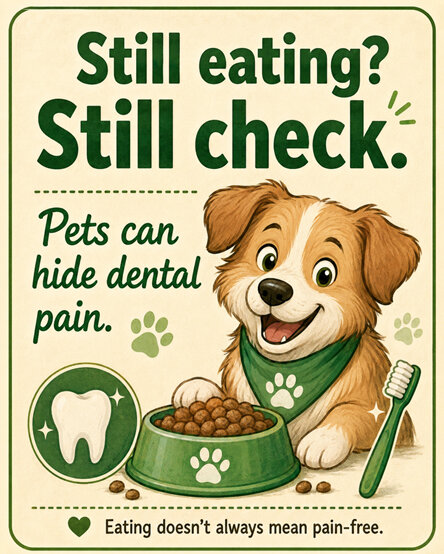
Bad breath, yellow tartar, red gums, chewing on one side, or dropping food can all be early signs your pet’s mouth needs a check. Pets are very good at hiding dental pain, so a little mouth check now can save a lot of trouble later.
Bad breath in pets is often treated as a bit of a joke: “dragon breath,” “dog breath,” or that classic old-cat smell.
But while a little whiff after dinner might be normal, ongoing bad breath is often one of the first signs that something is happening inside your pet’s mouth. Dental disease is incredibly common in both dogs and cats, and the tricky part is that many pets will keep eating, playing, and acting mostly normal even when their teeth or gums are uncomfortable.
That means dental problems can quietly build up before owners realise anything is wrong.
At Timaru’s Family Vet, we would much rather find dental issues early, while they are easier to manage, less painful for your pet, and usually less costly to treat.
Pets are very good at hiding discomfort. They do not usually walk up, tap us on the shoulder, and say, “Excuse me, my back molar is giving me grief.”
Instead, they adapt.
A dog might chew on the other side of their mouth.
A cat might swallow biscuits whole instead of crunching them.
Some pets keep eating because they are hungry, not because their mouth feels fine.
This is why the phrase “but they’re still eating” can be a little misleading. Eating is a survival behaviour. Many pets with sore mouths will still eat, especially if the pain has come on gradually.
Dental disease usually begins with plaque.
Plaque is a sticky film of bacteria that builds up on the teeth. If it is not removed, it can harden into tartar. Tartar then traps more bacteria around the gumline, which can lead to gum inflammation, infection, pain, and eventually damage around the tooth roots.
The part you can see at home is often only the tip of the iceberg. A tooth may look “not too bad” on the surface, while the real trouble is hiding under the gumline.
That is why dental checks are so useful. We are not just looking for dirty teeth. We are looking for signs of discomfort, infection, gum disease, broken teeth, loose teeth, and changes that may need treatment.
Bad breath is not just a smell problem. It can be a clue that bacteria and inflammation are building up in the mouth.
A healthy mouth should not smell strongly unpleasant all the time. If your pet’s breath has changed, become stronger, or could peel the paint off the hallway, it is worth getting checked.
The good news? Not every pet with bad breath needs major dental treatment. Sometimes early homecare, diet changes, dental chews, or a planned clean can help get things back under control.
The key is finding out what stage things are at.
A dental check is a chance to look properly at your pet’s mouth and talk through what we can see.
Depending on your pet, we may check:
Some pets are very cooperative. Others behave as though we have asked them to hand over their life savings. That is okay. We work with what they allow, and if we need a closer look, we will talk you through the next best step.
Yes. Dental disease mainly starts in the mouth, but mouth health can affect overall wellbeing.
Painful teeth and gums can change how pets eat, sleep, play, and behave. Chronic inflammation and infection can also place extra stress on the body.
For many owners, the biggest surprise after dental treatment is not just “their mouth smells better.” It is often:
“They’re eating better.”
“They’re brighter.”
“They’re playing again.”
“I didn’t realise how much they had slowed down.”
Dental comfort can make a big difference to quality of life.
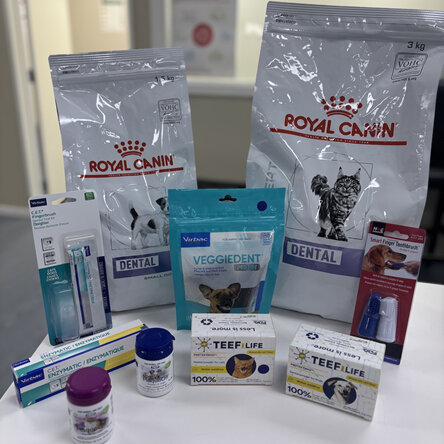
Home dental care does not need to be perfect to be helpful. The best plan is the one you can actually keep doing.
Options may include:
Not every product suits every pet. Some chews are too hard, some pets will not tolerate brushing, and some cats look personally offended by the entire concept. We can help you choose something realistic.
Please do not use human toothpaste for pets, as it is not designed to be swallowed and may contain ingredients that are unsafe for animals.
Please contact us if you notice:
If your pet has facial swelling, is not eating, seems very sore, or has a broken tooth, it is best to call sooner rather than waiting.
Dental disease is much easier to manage when we catch it early. A quick check now may help prevent pain, infection, extractions, and bigger treatment later.
Think of it as a mid-year mouth check-in. A small pause before the problem grows teeth of its own.
Early detection means happier mouths, fresher kisses, and fewer dental surprises hiding in the biscuit bowl.
A big part of our local community - Our Veterinary Practice has been an integral part of our local community since February 2010. In that time, we’ve helped thousands of our clients cats & dogs, rabbits, rats and even a few birds.